


Honoring the Women Who Built the Work: Women’s History Month & Social Work Month

March invites us to celebrate both Women’s History Month and Social Work Month. While many pioneers of social work are widely recognized, women of color are often excluded from mainstream narratives and textbooks, despite their foundational contributions to advocacy, public health, community organizing, and social reform.
At Lighthouse Therapy & Consulting, we believe it is important to intentionally name and honor the women whose work built systems of care in the face of racism, sexism, and systemic exclusion. Their leadership shaped social welfare, civil rights, and community mental health long before these terms were widely used.
This month, we are choosing to highlight women of color whose impact on social reform and social work continues to influence the field today.
🌿 Ida B. Wells: Truth as Advocacy
Ida B. Wells was an investigative journalist, educator, and civil rights activist who exposed the realities of lynching in America. Through research, data collection, and public education, she challenged violence and systemic racism at a time when doing so put her life at risk.
Her work modeled core social work principles: documentation, systemic analysis, advocacy, and community protection. She understood that silence sustains injustice, and that truth telling is a form of social reform.
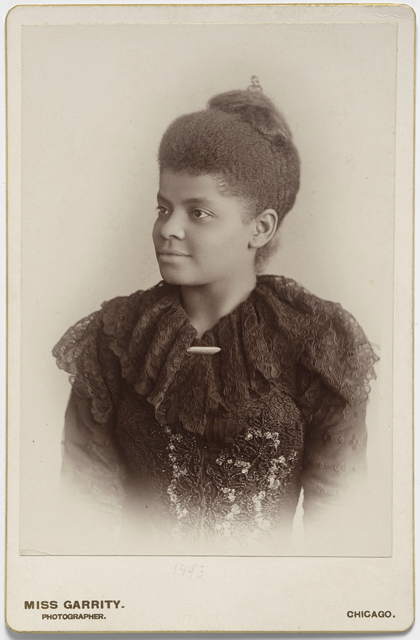
🌿 Mary Church Terrell: Organizing for Equity
Mary Church Terrell was a founding member of the National Association of Colored Women and a lifelong advocate for racial justice and women’s rights.
Terrell’s work focused on education, voting rights, and dismantling segregation. She believed that collective organizing was essential for community advancement. Her leadership represents the intersection of gender justice and racial equity, both of which remain central to social work values today.

🌿 Lugenia Burns Hope: Community Based Systems of Care
Lugenia Burns Hope founded the Neighborhood Union in Atlanta, one of the first community based organizations created to address the needs of Black families through coordinated health, education, and social services.
She built structured networks of care in communities that were intentionally underserved. Her work reflected what we now describe as culturally responsive practice, grassroots organizing, and prevention focused intervention.

🌿 Birdye Henrietta Haynes: Professional Leadership and Representation
Birdye Henrietta Haynes was one of the first Black women to serve in the American Red Cross and later became a leader in expanding professional opportunities for Black social workers.
Her work challenged exclusion within professional systems and emphasized the importance of representation within helping professions.
Why We Are Highlighting Women of Color
Women of color have historically carried the dual burden of racial and gender discrimination. Their work has often been overlooked, underfunded, or attributed to others. Yet they built schools, organized neighborhoods, advocated for civil rights, and created systems of support that protected families and communities.
In social work, we speak often about dignity, worth, and social justice. To live those values, we must also examine whose stories are amplified and whose are erased.
By centering women of color this month, we are intentionally correcting the narrative. We are honoring the intellectual labor, advocacy, and courage that shaped social reform and community mental health in ways that continue to influence our practice today.
Carrying the Legacy Forward
At Lighthouse Therapy & Consulting, we recognize that our work is part of a larger historical continuum. The advocacy, cultural responsiveness, and equity centered care we strive to provide did not begin with us.
It was built by women who organized when they were excluded.It was strengthened by women who spoke truth when it was dangerous.It was sustained by women who believed their communities deserved more.
This Women’s History Month and Social Work Month, we honor their legacy by continuing to advocate, serve, and lead with intention.
Because healing is not just clinical.
It is cultural.
It is communal.
And it is rooted in history.


Comments